Tag: workwear

  • Taking care of your work clothing

    Taking care of your work clothing

    Taking care of your work clothing is important. Without taking the correct care for your garments, you run the risk of impacting the effectiveness of the product. This can lead to the garment not giving you the protection it advertises. All protective work clothing has different

    ISO 20471 High visibility clothing care
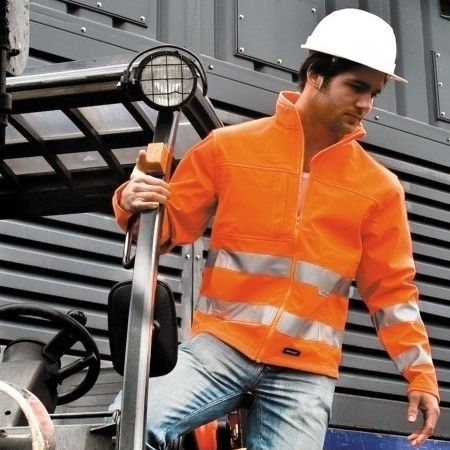
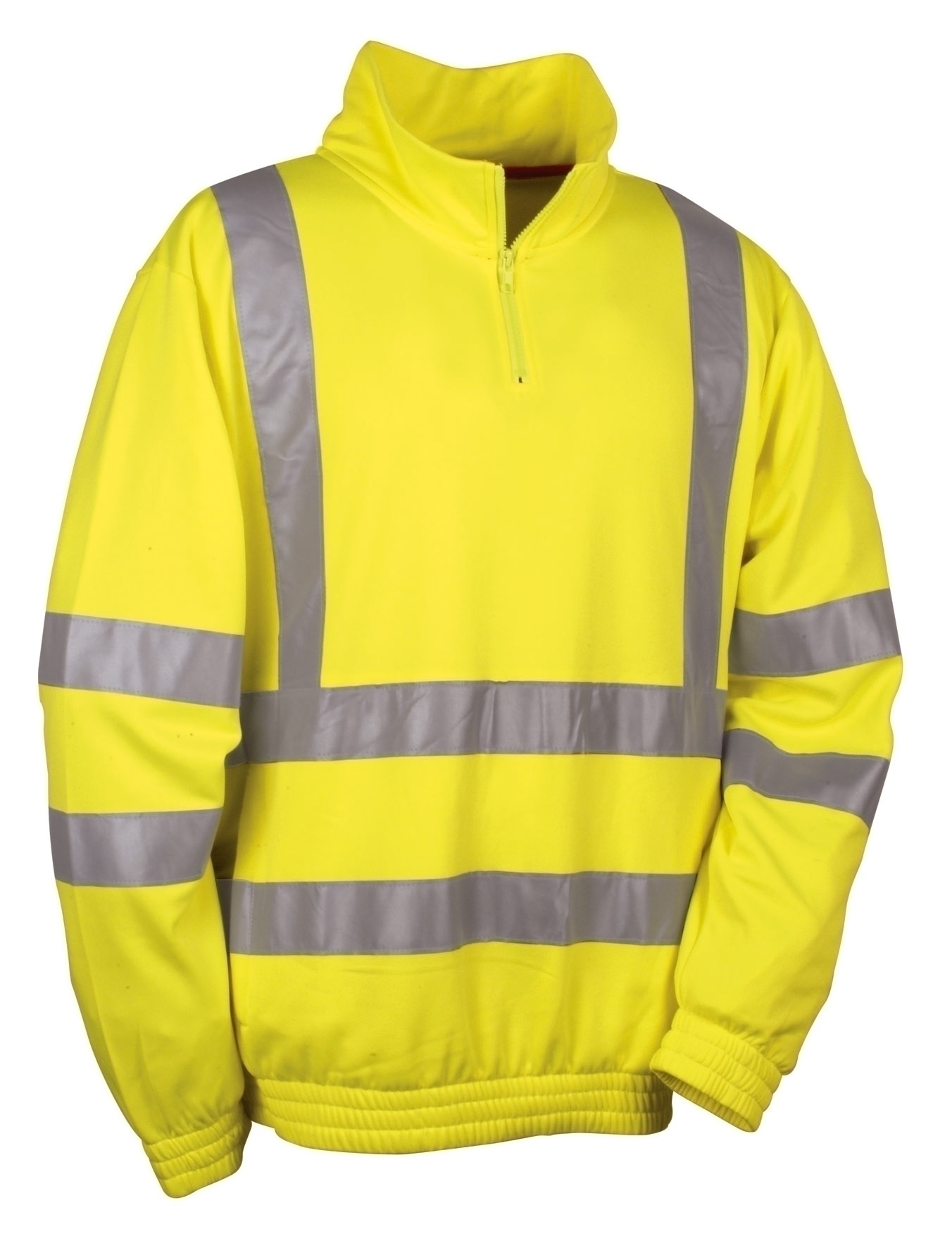
    The purpose of high vis clothing is to give the wearer improved visual acuity whilst onsite or working in low light or hazardous areas. If high vis clothing isn’t taken care of and laundered correctly, it can damage both the fluorescent fabric finish, and the overall effect of the reflective stripes. If this happens, your work clothing no longer meets the EN 471/ISO 20471 rating it had before, making it hazardous to wear. If you decide not to wash it, then grease and dirt buildup will have the same dampening effect on the reflective properties.

    • Always was hi vis clothing separately from other clothes, or together with other EN471/ISO20471 clothes.
    • Turn the products inside out before putting into washing machine.
    • Avoid detergents that contain optical whiteners.
    • Do NOT use fabric softeners or bleaching agents.
    • Ensure all zips are secured.
    • Follow the manufacturers general temperature guidelines.

    Following these simple steps will make your work clothing care for high vis much easier, and keep the garments in great shape! If your Hi Vis uses a GORE-TEX fabric, always tumble dry them at a low temperature, as this helps to “reactivate” the weather resistant properties.

    FR Clothing Care
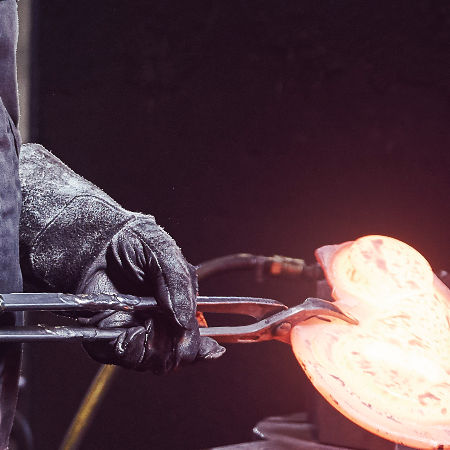
    For soiling on FR garments, pre-soaking in conditioned warm water, with use of a stain remover* to get rid of soiling. Also bare in mind that hard water can precipitate soap, resulting in a build-up of magnesium salts and calcium. These can actually have an adverse effect on the clothing, adding fuel to the combustion process. As with the high vis clothing, always turn your FR clothing inside out prior to washing.

    Fill your washing machine no more than two thirds of its capacity to allow the clothing to move around free and help the cleaning process. Always launder FR clothing separate from other clothing types, on a “normal” or “cotton care” cycle at a temperature of 60c maximum. For FR clothing care, you can use a regular home laundry detergent.

      • Always avoid using starch or fabric softeners.
      • Never launder FR clothing with chlorine bleach, or liquid nonchlorine bleach.
      • If contaminants remain after a wash, the FR clothing may require professional laundering.
      • Never “over dry” your FR clothing.

    FR clothing comes in two types – Inherent and treated fabrics. Treated fabrics will degrade with washing, but inherent FR products are protective at the fibre level, so they are far better lasting in comparison.

    Waterproof clothing care
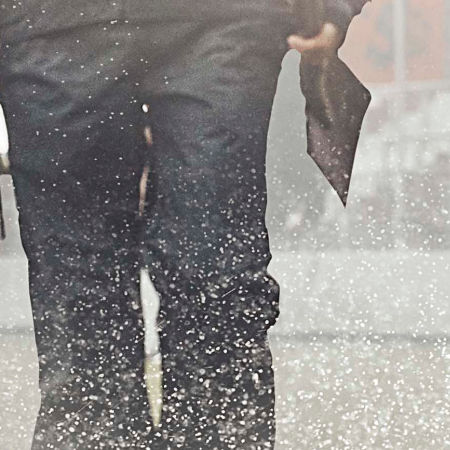
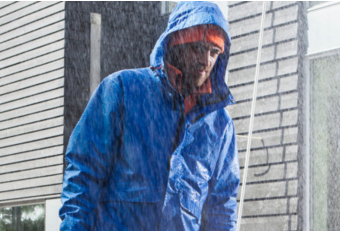
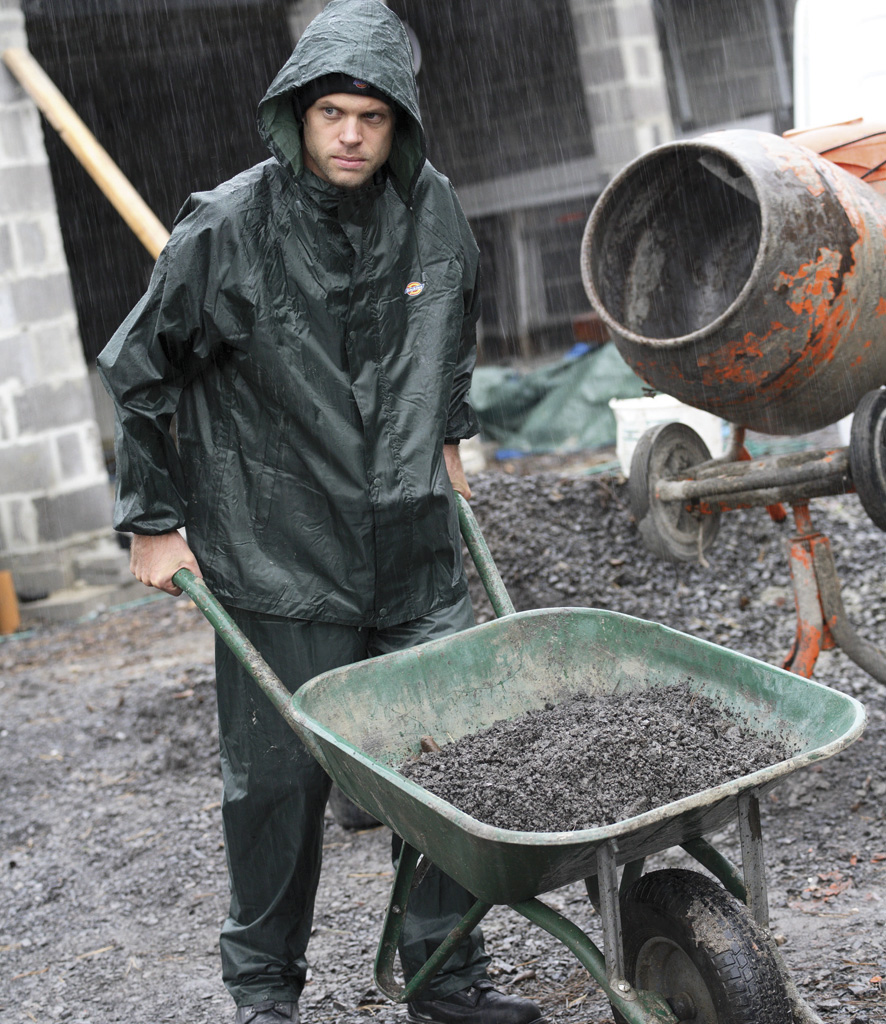
    waterproof clothing careWaterproof clothing is normally treated with a coating which gives them their protective qualities. Before laundering, ensure all loose soiling is removed, and close all the zips, flaps and pockets on the product. Ensure also that you avoid detergents and fabric softeners, as they can break down the fibres of the products itself, with each wash making the product less and less effective against foul weather.

    • Always use specific cleaners designed for technical outerwear.
    • Check that the detergent compartment in your machine and ensure it is clean/empty.
    • Wash waterproof clothing with only 2-3 other waterproof items at a time.
    • Use a wash and rinse cycle of 30c for best results*
    • Leave products to air dry, or if the care instructions say otherwise they can be tumble dried.

    Treated waterproof fabrics will degrade over time, and if you find your trousers or jacket is absorbing rather than repelling, the writing may be on the wall and you might want to invest in a new jacket. There are products available which can “re-proof” the fabric. If after treating the product still leaks, its definitely time to look for some new Waterproof clothing.
  • RPE – Respiratory protection

    RPE – Respiratory protection

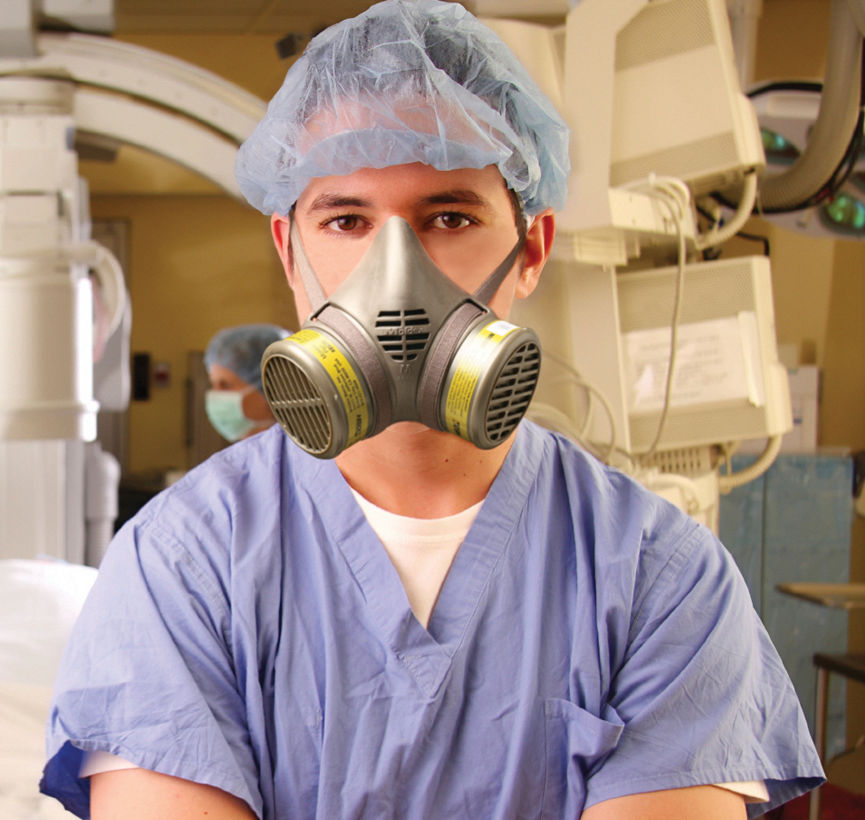
    A typical dustmask in use.

    If you work in certain environments or perform certain activities,  workers can become exposed to harmful particles that are present the air; such as dust, mist, vapour, gas or even fumes. To overcome this, ensure you outfit yourself with the correct RPE.

    So what is RPE?

    RPE is the general term that describes all dust masks and respirators. It stands for “Respiratory Protective Equipment”.
    There are several different types of RPE available:

    Dust masks – Dust masks come in three basic levels of protection, FFP1, FFP2, FFP3 with valved and un-valved styles. They are ideal for a number of roles, with the lower levels of protection ideal for particulates such as wood and cement dust. For more hazardous particles such as asbestos, a level 3 dust mask would be advised. Dust masks are a “single shift” product, that means they have a life of around 8 hours, potentially less. The different levels will reduce the amount of particles breathed in by factors of 4, 10 and 20 respectively. Dust masks, as the name suggests – are only really suitable for “hard” particles, vapour and gasses will seep through and cause irritation.

    Protection Level OEL Protection APF Protection
     FFP1  4x  4x
     FFP2  12x  10x
     FFP3  50x  20x
    OEL = Occupational Exposure Limit |  APF = Assigned Protection Factor

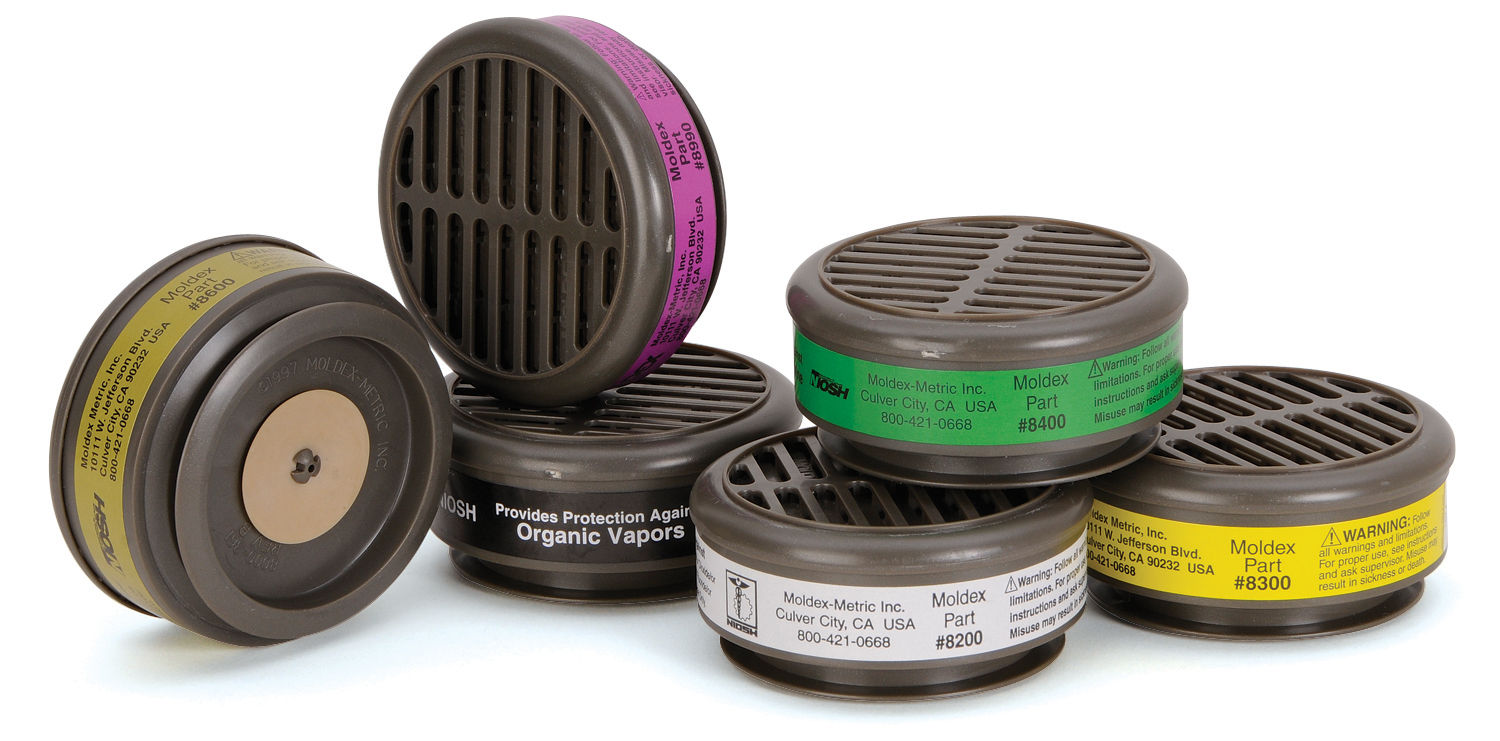
    Half and full face respirator masks – Unlike dust masks, respirators are intended for extended use. When maintained correctly, they will offer many years of effective usage. This type of RPE is far more adaptable than the dust masks, as they come in single or double filter styles. They attach with a bayonet connection, and there are a number of different filters which can be attached to provide protection against a wide range of hazards.

    Below is a simple guide to the types of protection common filters give . They are universally colour coded for ease of use.


    Colour Code Hazard Filter Type
     Brown  Organic Vapour  A
     Grey  Inorganic Vapour  B
     Yellow  Acid Gases  E
     Green  Ammonia  K
     White  Particulate  P


    See our excellent range of Respirators and accessories online in our store now.

  • Jacket Size and Protection Guide

    Jacket Size and Protection Guide

    When purchasing a new work jacket, there are several different factors to consider. Our simple how to guide on selecting the right work jacket for the right job should help you to make the correct decision.

    Sizing And Fitting

    When picking a new work jacket, ensure you have the right fit. Each manufacturers’ sizing guides vary, so always make a note of your measurements. Even if you regularly wear a medium, that doesn’t mean every medium will fit.

    [ap_column_wrap]
    [ap_column span=”2″]

    In order to get the perfect size for you, measure horizontally across the widest part of your chest; as illustrated by the image on the right. When doing this, ensure that you keep the tape measure totally straight across your back.

    Doing this not only gives you a great fit, but will ensure that you don’t have a jacket which is either restrictive to your movement, or too loose that it could get caught on machinery.

    [/ap_column]
    [ap_column span=”2″][/ap_column]

    [/ap_column_wrap]

    If you’re still unsure about your ideal size, view our sizing guide blog post.

    Safety Specifications

    Although most jackets provide basic protection, you’ll find there are more in depth products designed to protect against not only the elements, but also against occupational hazards.

    For example – if you work on a building site, roadside or at the side of tracks then ideally products which conform to EN ISO 20471, the standard for work clothing for low light conditions. Welders and engineers would greatly benefit from EN ISO 11611  jackets, designed to protect them against molten splash, arc flash and radiant heat amongst other hazards.

    For more information on EN ISO specifications, you can find out more at our EN SPEC page.

    Assess your environment and weather conditions

    Picking a work jacket on function alone isn’t enough to offer complete protection, especially when it comes down to the unpredictability of the elements. So it is always worth taking a look at the kind of environment you will be working in.

    Looking at things such as the fabric weight of a product, the lining and the presence of padding are a good initial indicator as to what kind of environment each jacket will be perfect for.

    It’s also worth looking at the particular fabric of a jacket, as products which are waterproof for example, can come in lightweight styles, although thermally they can be ineffective – so even though they’re lightweight in appearance you may end up sweating in them.

    Selecting the right jacket for the right environment

    So how do you know what sort of jacket is perfect for your job role? As previously mentioned there are many factors to this. Below you will find the best types of jacket for each season.

    Spring

    We’ve not quite hit summer yet, and on the tail end of the winter you might find the weather swings from one extreme to the next. Something to wear which will offer you warmth and protection from the wind, but keep you cool when conditions are optimal is the preferred choice.

    Our picks:


    Cofra
    Sweden
    Softshell

    Cofra
    Malaga
    Hi-Vis Softshell

    Fristads
    4500 SSM
    Softshell

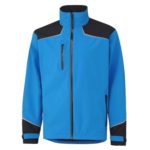
    Helly Hansen
    Chelsea
    Softshell


    *Click the images to view the products

    Summer

    For the warmer months, a jacket may not even be necessary in the daytime, but later in the afternoons and the evenings you may want something which offers some limited protection from the weather – lightweight and breathable.

    Our picks:

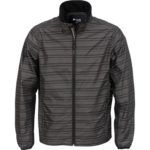
    Fristads
    A CODE
    Reflective Jacket
    Blaklader
    3160
    Waistcoat
    Dassy
    Avila
    Summer Body Warmer
    Castle
    Wroxham
    Bodywarmer


    *Click the images to view the products

    Autumn

    Autumn can be a wet, dreary time of the year, so the focus here should be on buying something which gives you adequate cover against rain.

    Our picks:

    Regatta
    Repeller
    Softshell Jacket
    Snickers
    Softshell
    Hooded Jacket
    Portwest
    Classic
    Rain Jacket
    Snickers
    Xtr
    Gore-Tex Jacket


    *Click the images to view the products

    Winter

    Winter styles lend themselves to keeping you warm when the temperature plummets, whether this is outdoors braving the elements themselves or inside braving the cold store – you’re going to want a jacket which offers excellent thermal properties.

    Our picks:

    Snickers
    Quilted
    FR Jacket
    Portwest
    Aviemore
    3in-1 Jacket
    Blaklader
    Multinorm
    Winter Jacket
    Fristads
    4916 GTT Airtech
    Winter Jacket


    *Click the images to view the products

    These are just a few of our personal favourites, for more excellent styles for all year round, visit our online store.

  • Fristads Kansas CODE 1460 Windproof Reflective Jacket

    Fristads Kansas CODE 1460 Windproof Reflective Jacket

    Here at the Workwear Blog, we wrote a piece on the evolution of workwear: what the future holds. One of the technology advances in the article was the use EL lighting to create work clothes which illuminate in all conditions. Today we are taking a closer look at one of the products helping to bring work and leisure wear into the 21st century. From Fristads, comes this exciting new product to the A Code range – the Code 1460 Windproof Reflective Jacket.

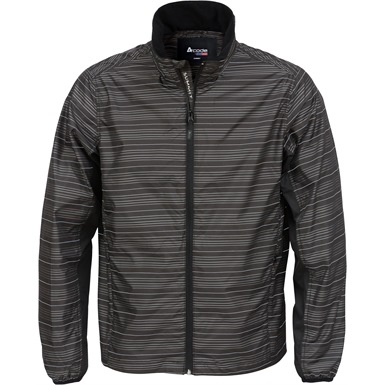
    The jacket features two zip pockets at the sides, and underarm ventilation to keep you cool whilst you work, with a collar that sports a comfy microfibre lining. The main fabric is a lightweight 75gsm polyester which will protect against both wind and rain.

    Fristads A Code Reflective Jacket

    So how does this reflective jacket tie into the Future of workwear?

    The standout feature of this jacket is the striped details. These grey stripes are more than just style, they’re reflective 3M, weaved into the fabric. This illuminates the jacket when dark, which gives you improved visual presence on site. This is a great product for hikers and those who work in darkened, low visibility environments.

     As you can see in the photo, the effect is quite dazzling!

    So be safe on site – The Fristads Code 1460 Windproof Reflective Jacket is available alongside our other excellent Fristads products in our online store – pick up yours today!

  • EN 471 and EN ISO 20471 – Know the Differences

    EN 471 and EN ISO 20471 – Know the Differences

    En 471 and En ISO 20471 differences explained

    Workwear can often be confusing, with many different standards and levels of protection – how do you know which one is right for you? Your safety is important, so keeping protected is something which should be taken as a priority above all else. One of the most commonly purchased types of product is High Visibility Clothing. There are several classes to high vis work clothing, from non-professional use, to specialist track and roadside classifications all with different levels of effectiveness. On  28th June 2013, a new standard was introduced – ENISO 20471:2013. This updated version of the EN471 standard offers quite a few differences – so let us run down some of them for you.

    Sleeves

    Under the EN471 standard, sleeves were allowed to be non fluorescent, this is true for many styles which have zip-off sleeve features. Under the revised EN ISO 20471 standard, all sleeves must be finished in a fluorescent fabric, with two bands of reflective tape.

    Body coverage, meeting class 3

    Under EN ISO 20471, Class 3 high visibility clothing must cover the body, and have full length sleeves and/or trouser legs complete with reflective striping detail. Under the old standard, bib and brace overalls could meet the class 3 standard. Under the updated EN ISO 20471 standard this is no longer the case due to their lack of sleeves.

    Class 2 Bib and brace

    On a bib and brace garment, the reflective tape around the waistline no longer contributes to the calculations which grant a product class 2 status for high visibility work clothing. To combat this, the reflective tape around the legs is widened from 50mm to 60mm in order for a Bib and brace to keep its class 2 standard.

    Retroreflective material requirements

    EN 471 Level 1 separate performance material requirements have been removed.

    The minimum performance requirements for separate performance material is essentially the same as the former EN 471 requirement for level 2 reflective materials. In the assessment of the retroreflective performance of materials, the method requires the tape to be tested on the poorest performing segment.

    The retroreflective tape is tested once it has been subjected to the stated maximum number of washing and drying cycles, as stated by the manufacturer. This differs from the final dry on EN 471 testing. Now the manufacturers can specify the washing process and temperature for testing – but this information must be reflected on the label of the product.

    Marking

    Initially under the EN 471 standard, garments were marked with a value of X and Y where X would be risk assessment and Y would be the quality of the reflective tape. This has been done away with on the newer EN ISO 20471 products, instead showing a single number on the pictogram, which details the level of protection only.

    Labels must also have an indication of the products maximum number of cleaning cycles before the safety features are impacted, but only in the event that this information is disclosed in the product information itself. This maximum number relates specifically to the high visibility material under the lowest level of cleaning performance as per the testing carried out on fluorescent and reflective materials.

    The EN 471 standards are updated every 5 years if needed, with the first standard being written in 1994.

  • Pacaya Lyviz Safety Glasses

    Pacaya Lyviz Safety Glasses

    New Product!

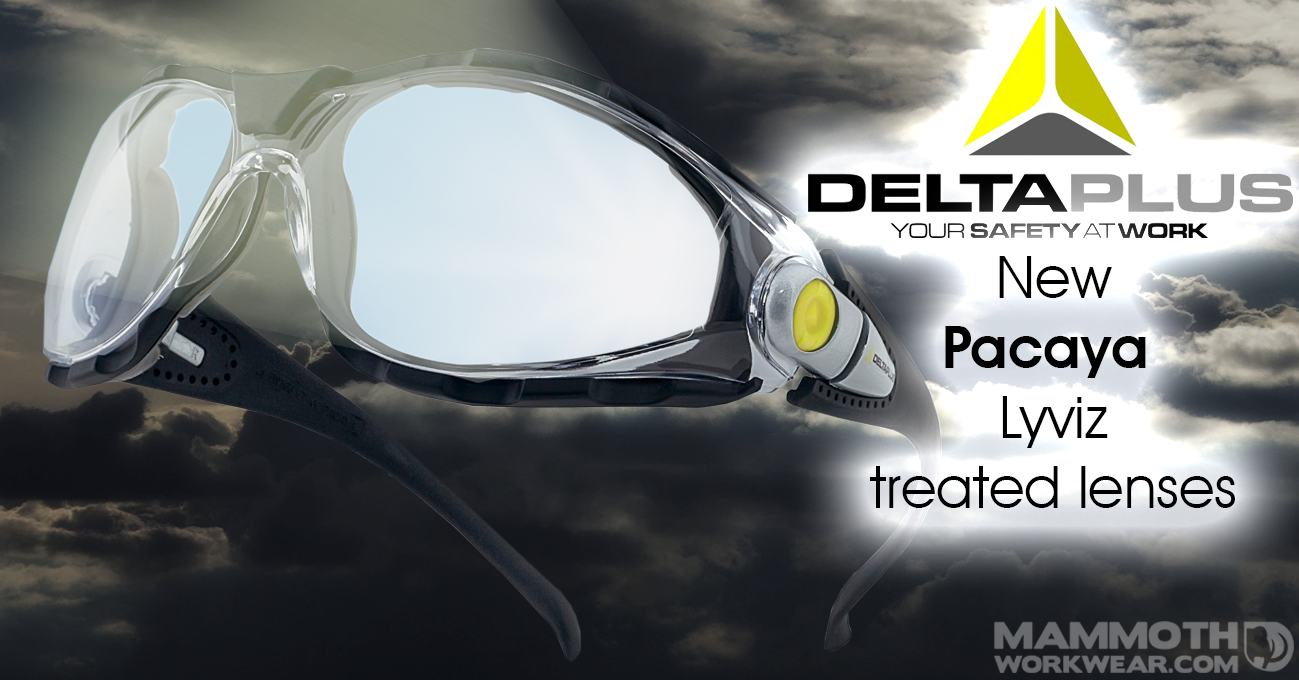
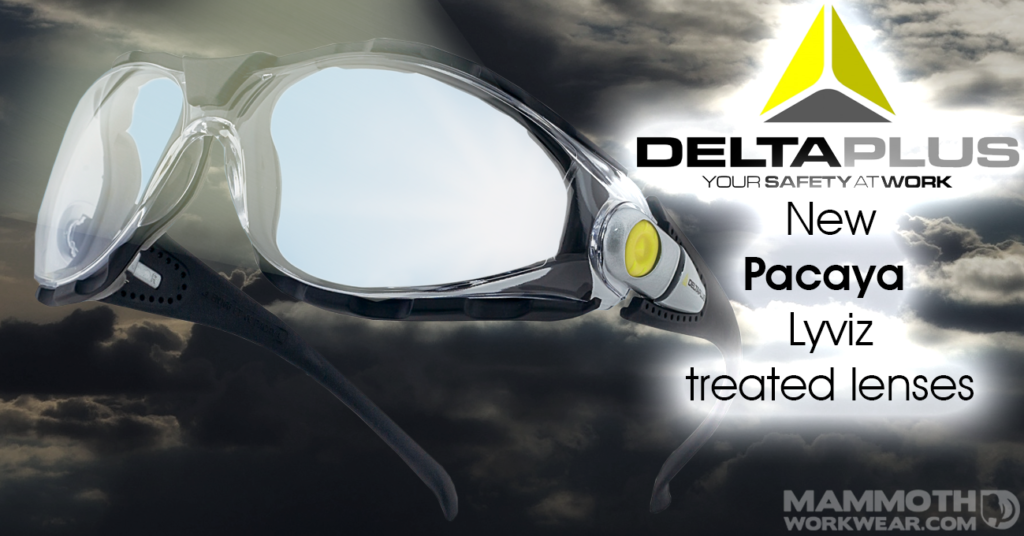
    The DeltaPlus Pacaya Lyviz Safety Glasses are a fantastic advancement in lens technology for those who work within job roles in the oil and gas industry, automotive and decorating.

    PACAYA

    The lightweight and sturdy polycarbonate frame and nose piece features adjustable nylon arms, with a removable foam frame to protect the wearer from dust and offer shock protection in the event of impacts.

    The main selling point of the DeltaPlus Pacaya Lyviz Safety Glasses are their excellent lenses. Infused with Lyviz technology, this gives the lenses a hydrophobic and oleophobic coating – meaning dirt, paint and water are repelled from the surface of the lens, to make them very easy to maintain and keep crystal clear. The lenses of the Pacaya Lyviz Safety Glasses also have a much higher abrasion resistance, and resist fogging.

    • Wipe or wash clean lenses.
    • Hydrophobic coating ensuring longer clean lenses.
    • Ideal for Oil, Gas, Painting & Automotive industries.
    • Polycarbonate single lens glasses.
    • Integrated polycarbonate nose piece.
    • Adjustable nylon arms.
    • Side protection.
    • Suitable for all faces with the tilting arms.
    • Removable foam frame for dust & shock protection.
    • UV400.
    • Anti-mist.
    • Anti-scratch.
    • EN166 Personal eye-protection 1 FT: Oculars marking.
    • EN166 Personal eye-protection FT: Frame marking.
    • EN170:2002 Ultraviolet filters UV 2C-1.2: echelon.
    • American: ANSI Z87.1-2003 Z87+: Impact resistance.

    check out our work wear products by clicking on our logo below

    cropped-Mammoth-Logo.png

    You can also visit our sister site by clicking the logo below

    MAMMOTH CLEANING SUPPLIES LOGO

  • EN 343 Waterproof Clothing Explained

    EN 343 Waterproof Clothing Explained

    en343-explained


    When its time to face the elements, it’s always important that your work clothing can offer you the right level of protection. When it comes to rain, you’re going to want to take advantage of clothing which is fully waterproof. Not to be confused with products that are water resistant or water repellent – fully waterproof work clothing meets EN343 standard, and differs from its counterparts, in terms of how it keeps you protected.

    Waterproof ClothingWater resistant clothing is able to resist penetration from water exposure to a certain extent, but will not be effective in heavy foul weather conditions, whereas products which are repellent are not so easily penetrated under exposure to water, and are usually hydrophobic in nature. Repellent products will usually be treated to bead water off of the surface, but water can still get into certain areas such as seams, zips and pockets.

    Products which fall into the EN 343 foul weather protection category, are defined by two attributes –

    • Water penetration
    • Water vapour resistance

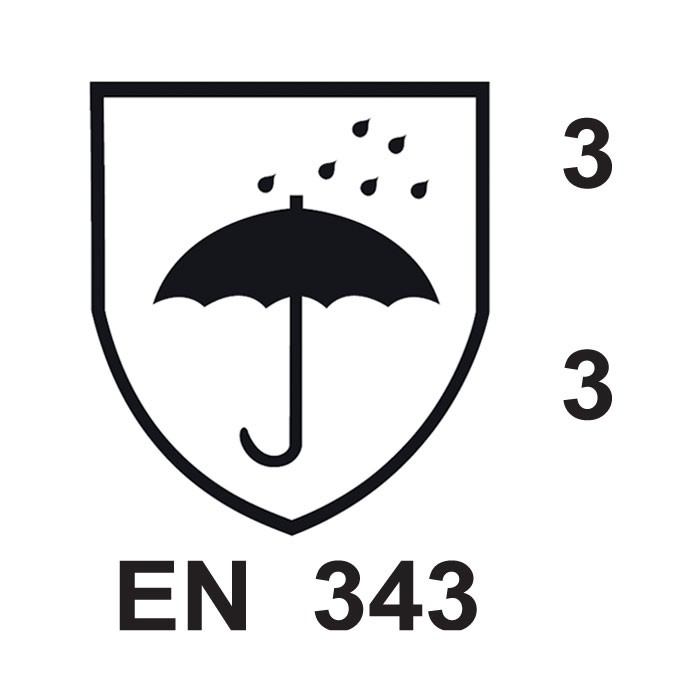
    These values are split into three classes from 1 through to 3, and accompany the EN343 pictograph as illustrated:

    EN343 Pictograph
    The EN343 Pictograph

    Below you can see a breakdown of the three levels of water penetration resistance for En 343 foul weather clothing. 8000 Pa (Pascal units) equates to 1.16 pounds per square inch (PSI).

    Water Penetration Resistance Class
    1 2 3
    Test on fabric ≥ 8 000 Pa, before pre-treatment ≥ 8 000 Pa , after pre-treatment ≥ 13 000 Pa, after pre-treatment
    Tests on seam, before pre-treatment ≥ 8 000 Pa ≥ 8 000 Pa ≥ 13 000 Pa

    1 mVc (meter water column) = 10 000 Pa

    The table below shows the attributes of vapour resistivity, based on the operating temperature, and the number of hours which the garment can withstand vapour penetration.

    The preferred working hours based on the garment’s water vapour resistivity Class
    Operating temperature °C 1 2 3
    25 60 105 205
    20 75 250 –
    15 100 – –
    10 240 – –
    5 – – –

    “-” Means that working time is not limited.

    As with all types of protective clothing, EN 343 certified waterproof clothing garments should be looked after in the correct manner, in order to maintain their protective qualities. For maximum effectiveness you must always ensure that the products are well fitted and closed fully to reduce any chance of water penetration, and that the fabric itself is kept clean, as dirt can negatively impact the effectiveness of the protection. It’s always important that foul weather protective clothing and accessories are stored in dry and well ventilated areas. As with all clothes, it is also recommended to follow any fabric care instructions applicable to individual items, to help further maintain their protective qualities.

    Click our logo below to view our full range of EN343 Waterproof Clothing

    Mammoth-Logo

    You can also visit our sister site by clicking the logo below
    MAMMOTH CLEANING SUPPLIES LOGO