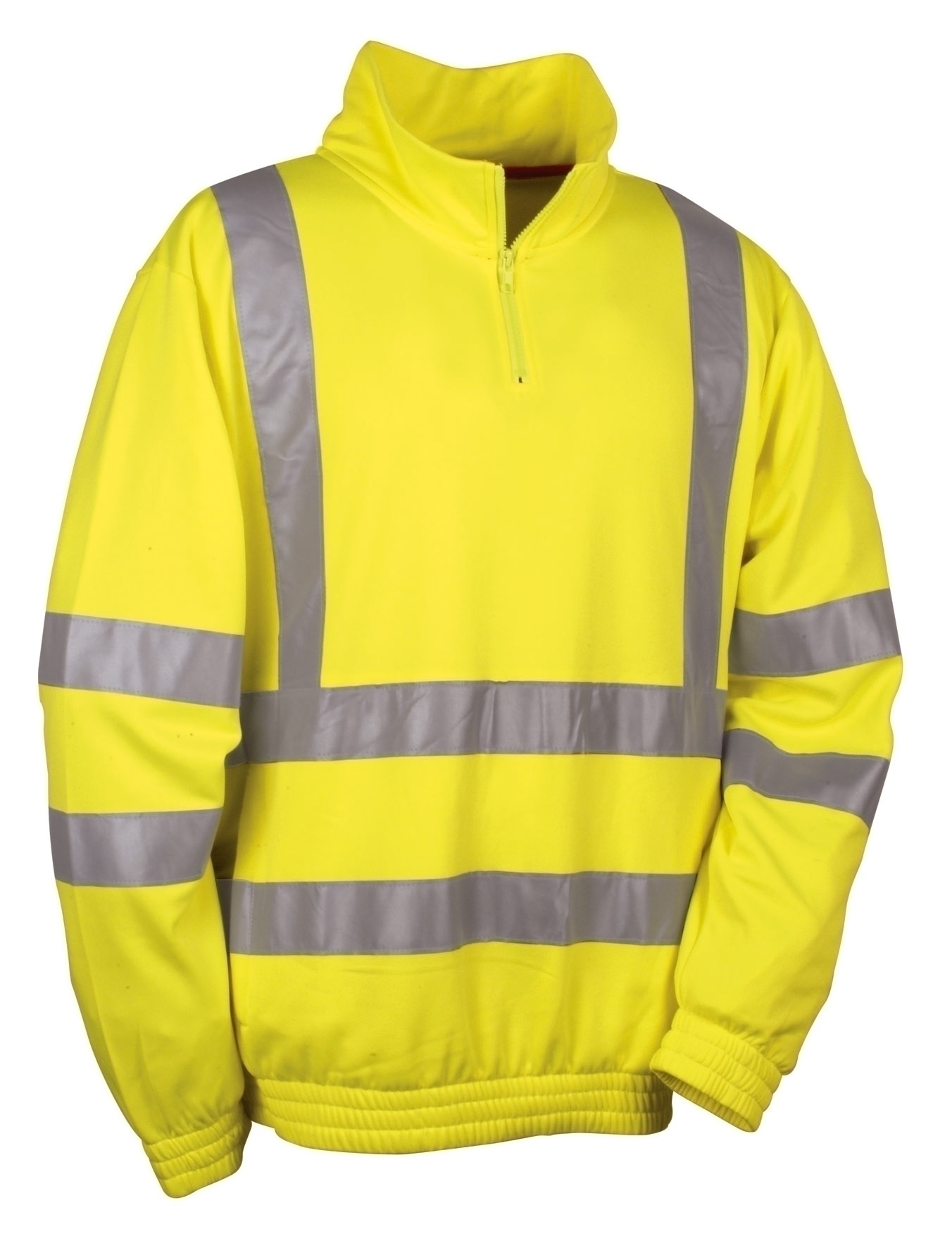
Workwear can often be confusing, with many different standards and levels of protection – how do you know which one is right for you? Your safety is important, so keeping protected is something which should be taken as a priority above all else. One of the most commonly purchased types of product is High Visibility Clothing. There are several classes to high vis work clothing, from non-professional use, to specialist track and roadside classifications all with different levels of effectiveness. On 28th June 2013, a new standard was introduced – ENISO 20471:2013. This updated version of the EN471 standard offers quite a few differences – so let us run down some of them for you.
Sleeves
Under the EN471 standard, sleeves were allowed to be non fluorescent, this is true for many styles which have zip-off sleeve features. Under the revised EN ISO 20471 standard, all sleeves must be finished in a fluorescent fabric, with two bands of reflective tape.
Body coverage, meeting class 3
Under EN ISO 20471, Class 3 high visibility clothing must cover the body, and have full length sleeves and/or trouser legs complete with reflective striping detail. Under the old standard, bib and brace overalls could meet the class 3 standard. Under the updated EN ISO 20471 standard this is no longer the case due to their lack of sleeves.
Class 2 Bib and brace
On a bib and brace garment, the reflective tape around the waistline no longer contributes to the calculations which grant a product class 2 status for high visibility work clothing. To combat this, the reflective tape around the legs is widened from 50mm to 60mm in order for a Bib and brace to keep its class 2 standard.
Retroreflective material requirements
EN 471 Level 1 separate performance material requirements have been removed.
The minimum performance requirements for separate performance material is essentially the same as the former EN 471 requirement for level 2 reflective materials. In the assessment of the retroreflective performance of materials, the method requires the tape to be tested on the poorest performing segment.
The retroreflective tape is tested once it has been subjected to the stated maximum number of washing and drying cycles, as stated by the manufacturer. This differs from the final dry on EN 471 testing. Now the manufacturers can specify the washing process and temperature for testing – but this information must be reflected on the label of the product.
Marking
Initially under the EN 471 standard, garments were marked with a value of X and Y where X would be risk assessment and Y would be the quality of the reflective tape. This has been done away with on the newer EN ISO 20471 products, instead showing a single number on the pictogram, which details the level of protection only.
Labels must also have an indication of the products maximum number of cleaning cycles before the safety features are impacted, but only in the event that this information is disclosed in the product information itself. This maximum number relates specifically to the high visibility material under the lowest level of cleaning performance as per the testing carried out on fluorescent and reflective materials.
The EN 471 standards are updated every 5 years if needed, with the first standard being written in 1994.