Blog

  • Product showcase – Fortress Fort Nelson Safety Dealer Boots

    Product showcase – Fortress Fort Nelson Safety Dealer Boots

    ff103

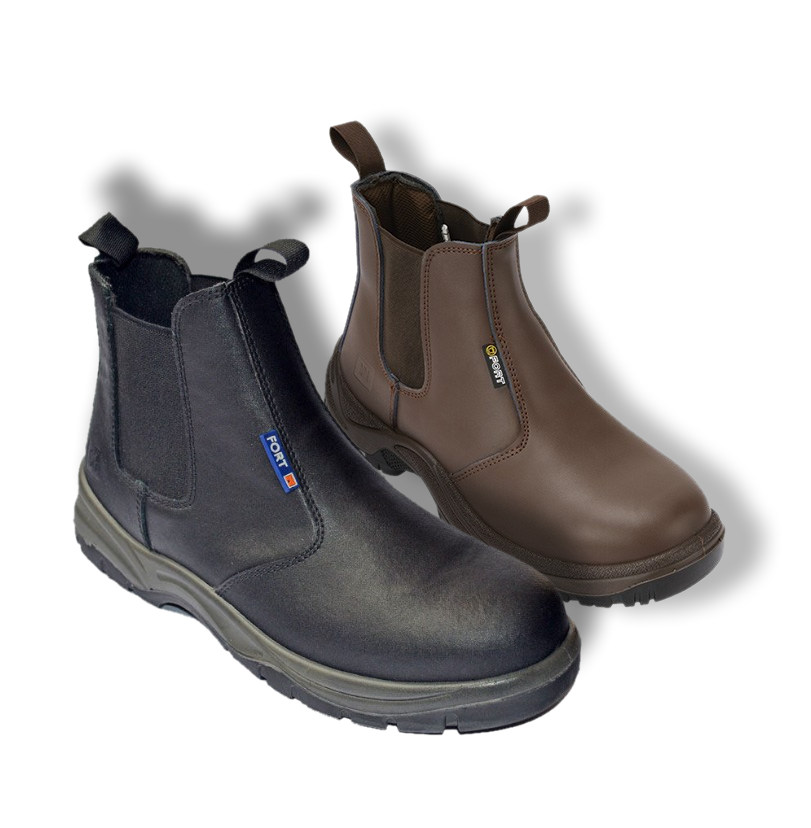
    A fortress for your feet.

    Designed to offer excellent comfort and protection for your feet, the Fort Nelson Safety Dealer Boots feature an S1P safety rating, conforming to EN ISO 20345. The durable smooth leather uppers have elasticated side panels, making getting these boots on or off a simple task – no messy laces here!

    If you’re in the market for a new pair of durable, and affordable safety boots, these are ideal!

    Shop Now

    Features
    Features

    • EN ISO 20345:2011.
    • Leather uppers.
    • Steel anti-penetration midsole
    • S1P rated.
    • Steel toe cap.
    • Dual density PU Sole.
  • Product Showcase – HH Workwear Aker Insulated Jacket

    Product Showcase – HH Workwear Aker Insulated Jacket

    helly-hansen-aker-insulated-jacket-w1280h1024q90i26797

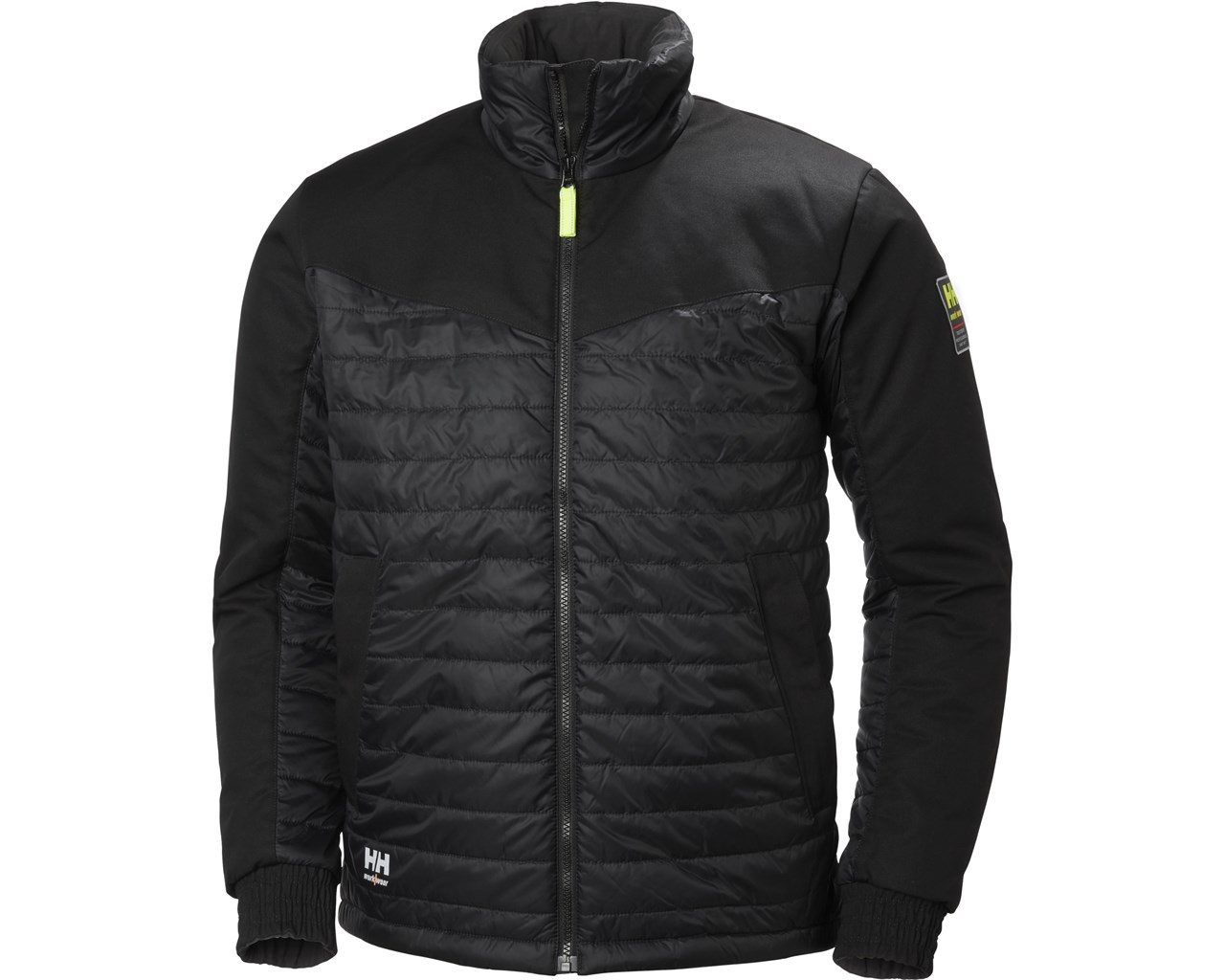
    Put Winter on ice.

    Helly Hansen are masters of crafting work clothing capable of keeping you warm on the coldest of days. The Aker Insulated Jacket features a Primaloft insulation layer, and comes equipped with an array of handy storage pockets.


    Winter is coming – so prepare yourself for the cold snap!


    Buy here

    Features
    Protection / Norms
    Features

    • Primaloft thermal insulation
    • Elasticated cuffs
    • YKK zips
    • Drawcord adjustable hem
    • Reflective details
    • Brushed polyester inside collar

    Protection / Norms
    Thermal Properties – This jacket features a lining which offers exceptional warmth.


    Wind Resistant – Fabric ensures protection against wind.

  • Product Showcase – Fristads Kansas 4004 FLE Fleece Jacket

    Product Showcase – Fristads Kansas 4004 FLE Fleece Jacket

    grey-fristads-kansas-4004-fle-fleece-jacket-w1280h1024q90i27499

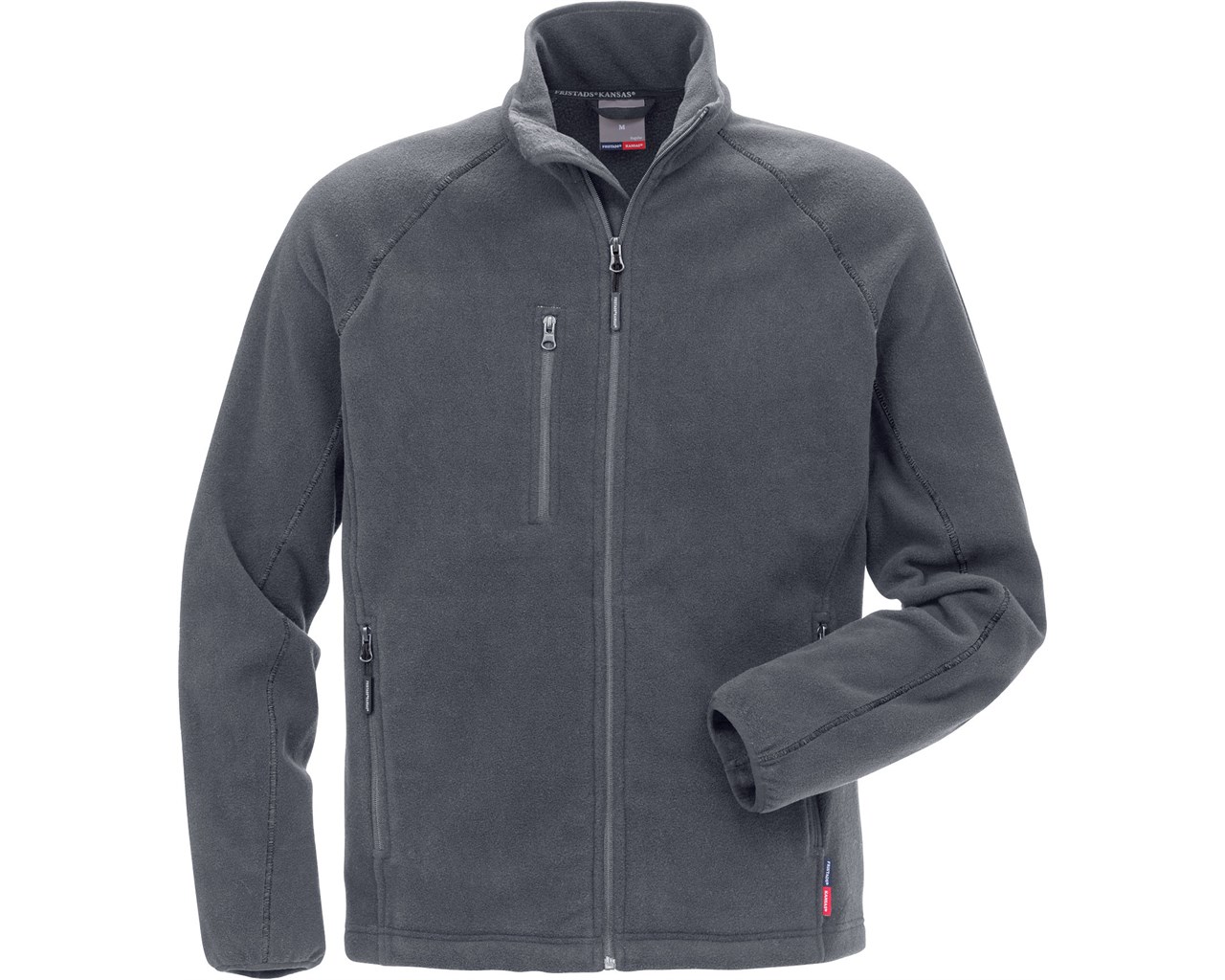
    Warm, and functional.

    This fantastic fleece offers warmth and a whole host of practical features. Currently part of our December Fristads promotion, when you buy one, you get another for half price!


    Just click the promo info tab below to find out more about our range of buy one, get one half price Fristads Kansas products.

    Features
    Promo info
    Features

    • Raglan sleeves
    • Full front zip
    • Elastic binding on sleeve ends
    • Zipped chest pocket
    • Contrast stitching
    • Zipped front pockets

    Promo info

    This item is one of a selection Fristads Kansas products on offer this December!* Buy one, and you’ll receive a second for half price! You can buy it online here! Click the banner below, and you can view the entire range in our online store!

    *Promotional offer, valid until midnight, 28th December.

  • Mammoth in the Community – The National Citizens Service

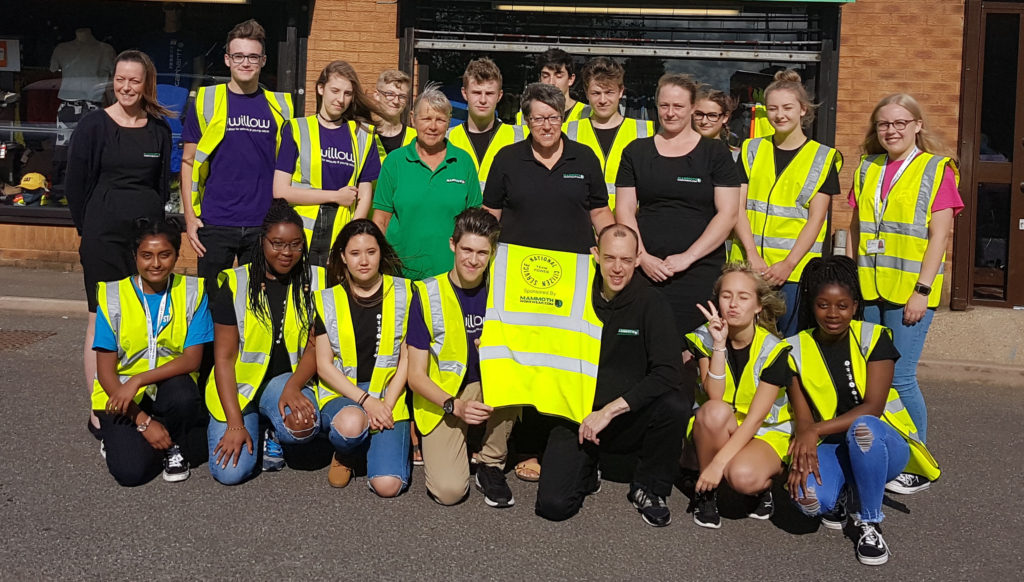
    As part of our ongoing scheme to support local communities and groups,  we are proud to work with the National Citizen Service, who on Tuesday the 22nd of August will undertake an epic sponsored walk.

    The National Citizens Service work alongside 15-17 year old children to help nurture their futures and build skills to prepare them for adult work and life. They are currently raising money for the Willow Foundation by way of a sponsored walk, and here at Mammoth Workwear we are proud to work alongside them as a sponsor, providing them with some much needed high visibility vests for their journey!

    Their journey will begin at Huntingdon Train Station in the Morning of the 22nd of August, and will finish when the reach the Peterborough Regional College. The Willow Foundation are a non-profit organisation, who have been changing lives for the better since 1999, providing uplifting and memorable days and special experiences to those unfortunate enough to be living with serious, life-threatening diseases. They have provided over 14’000 special days for young adults across the country.


    If you’re looking to help contribute to the NCS and their fundraising efforts, visit their Justgiving page.  For more information on the Willow Foundation, visit their website here.

  • Women in Industry and Engineering

    Women in Industry and Engineering

    Girl Power!


    The History of women in industry can be traced back to Ancient Rome, where women were not able to vote or have their voices heard at political assemblies. They were prohibited from holding any position of political responsibility, and even in roles they could partake in with religious organisations, they were still largely governed by the males of the society. These gender roles and norms continued throughout the Middle Ages and Medieval Times. It wasn’t until around the “Age of Enlightenment” in 1650 that women could begin to move with the idea that perhaps they could be as successful, if not more than – their male counterparts.

    Fast forward to 1820, and the increased roles of women in industry were under scrutiny, as males saw this and the rising prominence of machinery as a threat to their status, and reasoning behind their declining pay. Starting in Massachusetts, unionisation began and women found themselves rarely involved in male unionisation efforts until the formation of the LFLRA in 1844, who stood up for labour issues such as higher wages and more reasonable working days, fighting against new legislature in the States which forced women to tend machines at an accelerated rate, endangering their wellbeing.

    It wasn’t until 1964 that women would see major progress, with the passing of the Civil Rights Act, which outlawed discrimination based on race, colour, religion, nationality and most importantly, gender. In the modern day, women are now making waves thanks to a number of groups and associations which help to promote and celebrate women across all industries. Here are three such groups, with International Women in Engineering Day coming up this friday, take this opportunity to read more into the story of women in industry, or learn where to go to make your own headway into the industry of your choice.

    [ap_column_wrap]
    [ap_column span=”3″]

    Womens Engineering Society

    The Womens Engineering Society was formed way back on June the 23rd 1919, by a small committee crafted from the National Council of Women after the first world war. Women were welcomed into professions during the war, but afterwards they found themselves under pressure to “release” jobs for men returning from the frontlines.

    These ladies resisted and formed WES, as a means to promote ladies in industry and to show other women that engineering roles can be just as rewarding for women as they are for men.  In recent years, WES have created the International Women in Engineering Day, an event which runs annually on June 23rd.

    Womens Engineering Society

    International Women in Engineering Day
    [/ap_column]
    [ap_column span=”3″][/ap_column]
    [/ap_column_wrap]

    [ap_column_wrap]
    [ap_column span=”3″][/ap_column]
    [ap_column span=”3″]

    WISE

    Wise are an organisation which was formed in 1984, following a report on the future of the UK engineering industry. This report emphasised the need for a diverse, broad talent pool of scientists and engineers. In 1984, the Engineering Council worked together with the Equal Opportunities commission to form WISE (Women into Science and Engineering).

    WISE enable and encourage people in industry, business and education to increase the contributions, participation and success of women in STEM.

    WISE website
    [/ap_column]
    [/ap_column_wrap]

    [ap_column_wrap]
    [ap_column span=”3″]

    NAWIC

    The National Association of Women in Construction was created in 1955 in Fort Worth, Texas. An expansion of the already established “Women in Construction in Fort Worth” group, NAWIC were an active community of women looking to build a platform for all ladies in industry to build their confidence and help them to achieve their full potential.

    In the 60 plus years since their inception, they are now an internationally recognised association, with affiliates worldwide – Launching the UK NAWIC group in 2003.

    NAWIC Website [/ap_column]
    [ap_column span=”3″][/ap_column]
    [/ap_column_wrap]
  • Taking care of your work clothing

    Taking care of your work clothing

    Taking care of your work clothing is important. Without taking the correct care for your garments, you run the risk of impacting the effectiveness of the product. This can lead to the garment not giving you the protection it advertises. All protective work clothing has different

    ISO 20471 High visibility clothing care

    The purpose of high vis clothing is to give the wearer improved visual acuity whilst onsite or working in low light or hazardous areas. If high vis clothing isn’t taken care of and laundered correctly, it can damage both the fluorescent fabric finish, and the overall effect of the reflective stripes. If this happens, your work clothing no longer meets the EN 471/ISO 20471 rating it had before, making it hazardous to wear. If you decide not to wash it, then grease and dirt buildup will have the same dampening effect on the reflective properties.

    • Always was hi vis clothing separately from other clothes, or together with other EN471/ISO20471 clothes.
    • Turn the products inside out before putting into washing machine.
    • Avoid detergents that contain optical whiteners.
    • Do NOT use fabric softeners or bleaching agents.
    • Ensure all zips are secured.
    • Follow the manufacturers general temperature guidelines.

    Following these simple steps will make your work clothing care for high vis much easier, and keep the garments in great shape! If your Hi Vis uses a GORE-TEX fabric, always tumble dry them at a low temperature, as this helps to “reactivate” the weather resistant properties.

    FR Clothing Care

    For soiling on FR garments, pre-soaking in conditioned warm water, with use of a stain remover* to get rid of soiling. Also bare in mind that hard water can precipitate soap, resulting in a build-up of magnesium salts and calcium. These can actually have an adverse effect on the clothing, adding fuel to the combustion process. As with the high vis clothing, always turn your FR clothing inside out prior to washing.

    Fill your washing machine no more than two thirds of its capacity to allow the clothing to move around free and help the cleaning process. Always launder FR clothing separate from other clothing types, on a “normal” or “cotton care” cycle at a temperature of 60c maximum. For FR clothing care, you can use a regular home laundry detergent.

      • Always avoid using starch or fabric softeners.
      • Never launder FR clothing with chlorine bleach, or liquid nonchlorine bleach.
      • If contaminants remain after a wash, the FR clothing may require professional laundering.
      • Never “over dry” your FR clothing.

    FR clothing comes in two types – Inherent and treated fabrics. Treated fabrics will degrade with washing, but inherent FR products are protective at the fibre level, so they are far better lasting in comparison.

    Waterproof clothing care

    waterproof clothing careWaterproof clothing is normally treated with a coating which gives them their protective qualities. Before laundering, ensure all loose soiling is removed, and close all the zips, flaps and pockets on the product. Ensure also that you avoid detergents and fabric softeners, as they can break down the fibres of the products itself, with each wash making the product less and less effective against foul weather.
    • Always use specific cleaners designed for technical outerwear.
    • Check that the detergent compartment in your machine and ensure it is clean/empty.
    • Wash waterproof clothing with only 2-3 other waterproof items at a time.
    • Use a wash and rinse cycle of 30c for best results*
    • Leave products to air dry, or if the care instructions say otherwise they can be tumble dried.

    Treated waterproof fabrics will degrade over time, and if you find your trousers or jacket is absorbing rather than repelling, the writing may be on the wall and you might want to invest in a new jacket. There are products available which can “re-proof” the fabric. If after treating the product still leaks, its definitely time to look for some new Waterproof clothing.

  • RPE – Respiratory protection

    RPE – Respiratory protection

    A typical dustmask in use.

    If you work in certain environments or perform certain activities,  workers can become exposed to harmful particles that are present the air; such as dust, mist, vapour, gas or even fumes. To overcome this, ensure you outfit yourself with the correct RPE.

    So what is RPE?

    RPE is the general term that describes all dust masks and respirators. It stands for “Respiratory Protective Equipment”.
    There are several different types of RPE available:

    Dust masks – Dust masks come in three basic levels of protection, FFP1, FFP2, FFP3 with valved and un-valved styles. They are ideal for a number of roles, with the lower levels of protection ideal for particulates such as wood and cement dust. For more hazardous particles such as asbestos, a level 3 dust mask would be advised. Dust masks are a “single shift” product, that means they have a life of around 8 hours, potentially less. The different levels will reduce the amount of particles breathed in by factors of 4, 10 and 20 respectively. Dust masks, as the name suggests – are only really suitable for “hard” particles, vapour and gasses will seep through and cause irritation.

    Protection Level OEL Protection APF Protection
     FFP1  4x  4x
     FFP2  12x  10x
     FFP3  50x  20x
    OEL = Occupational Exposure Limit |  APF = Assigned Protection Factor

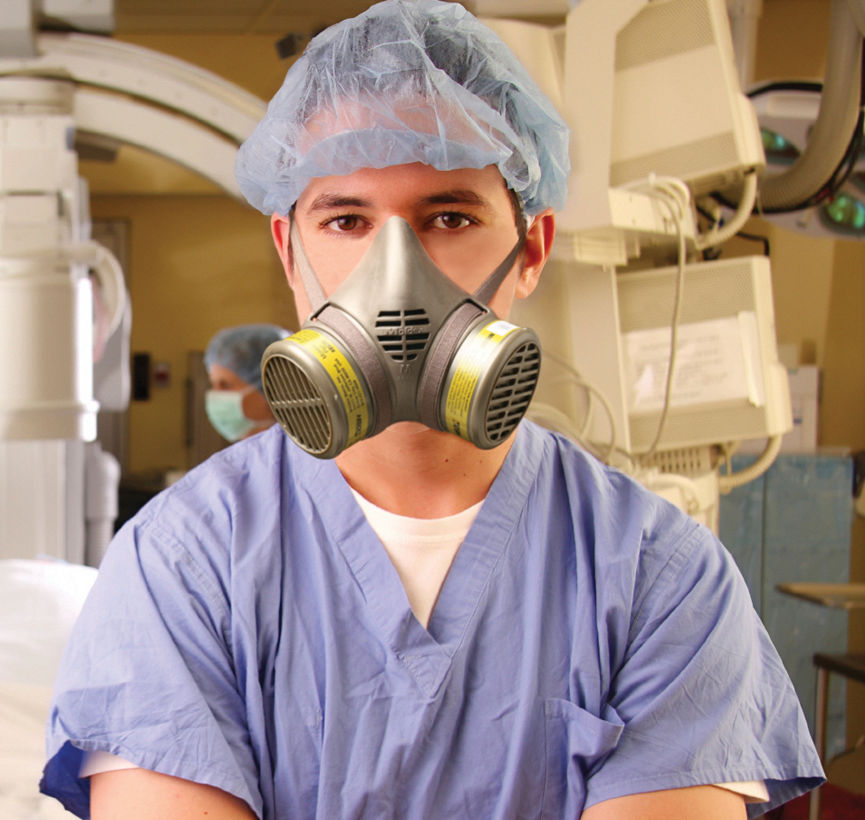
    Half and full face respirator masks – Unlike dust masks, respirators are intended for extended use. When maintained correctly, they will offer many years of effective usage. This type of RPE is far more adaptable than the dust masks, as they come in single or double filter styles. They attach with a bayonet connection, and there are a number of different filters which can be attached to provide protection against a wide range of hazards.

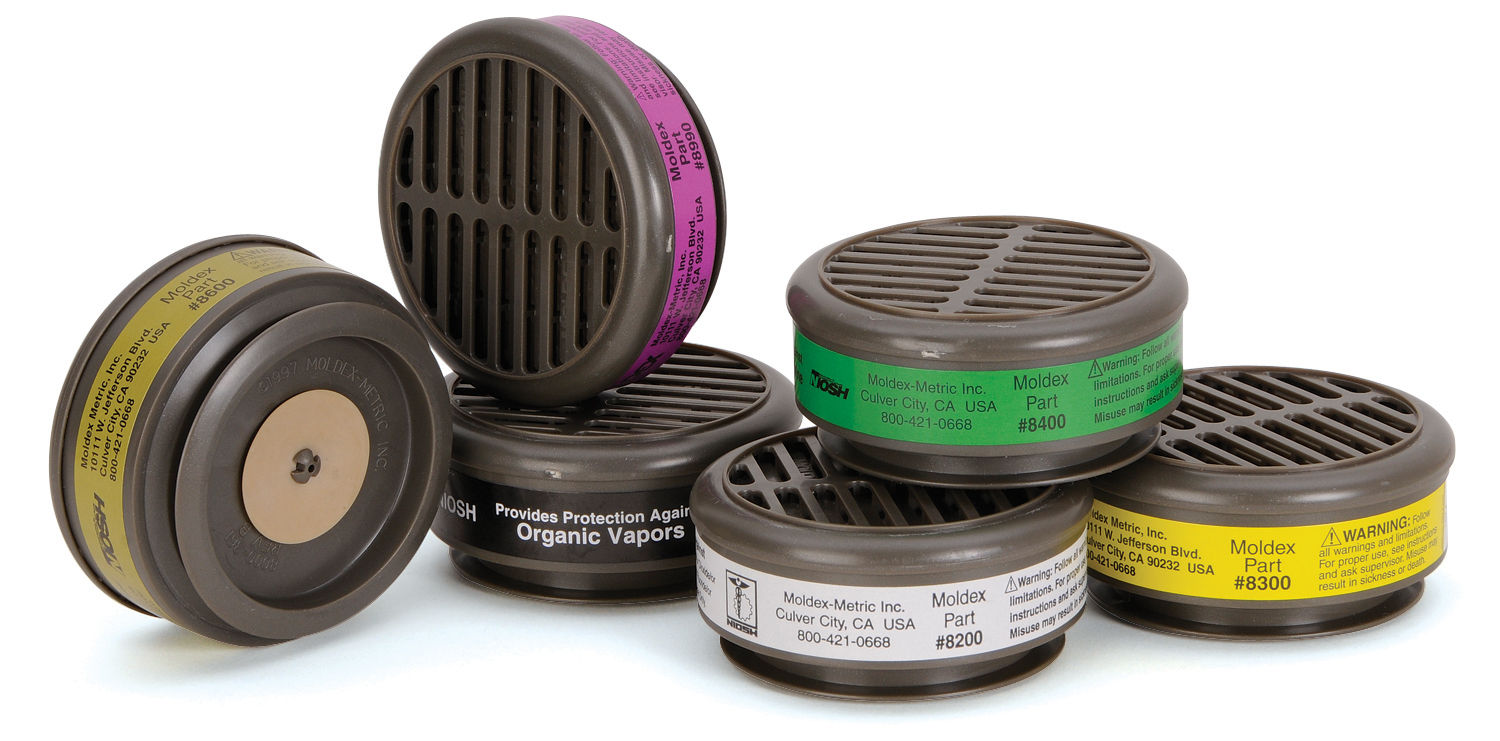
    Below is a simple guide to the types of protection common filters give . They are universally colour coded for ease of use.


    Colour Code Hazard Filter Type
     Brown  Organic Vapour  A
     Grey  Inorganic Vapour  B
     Yellow  Acid Gases  E
     Green  Ammonia  K
     White  Particulate  P


    See our excellent range of Respirators and accessories online in our store now.